
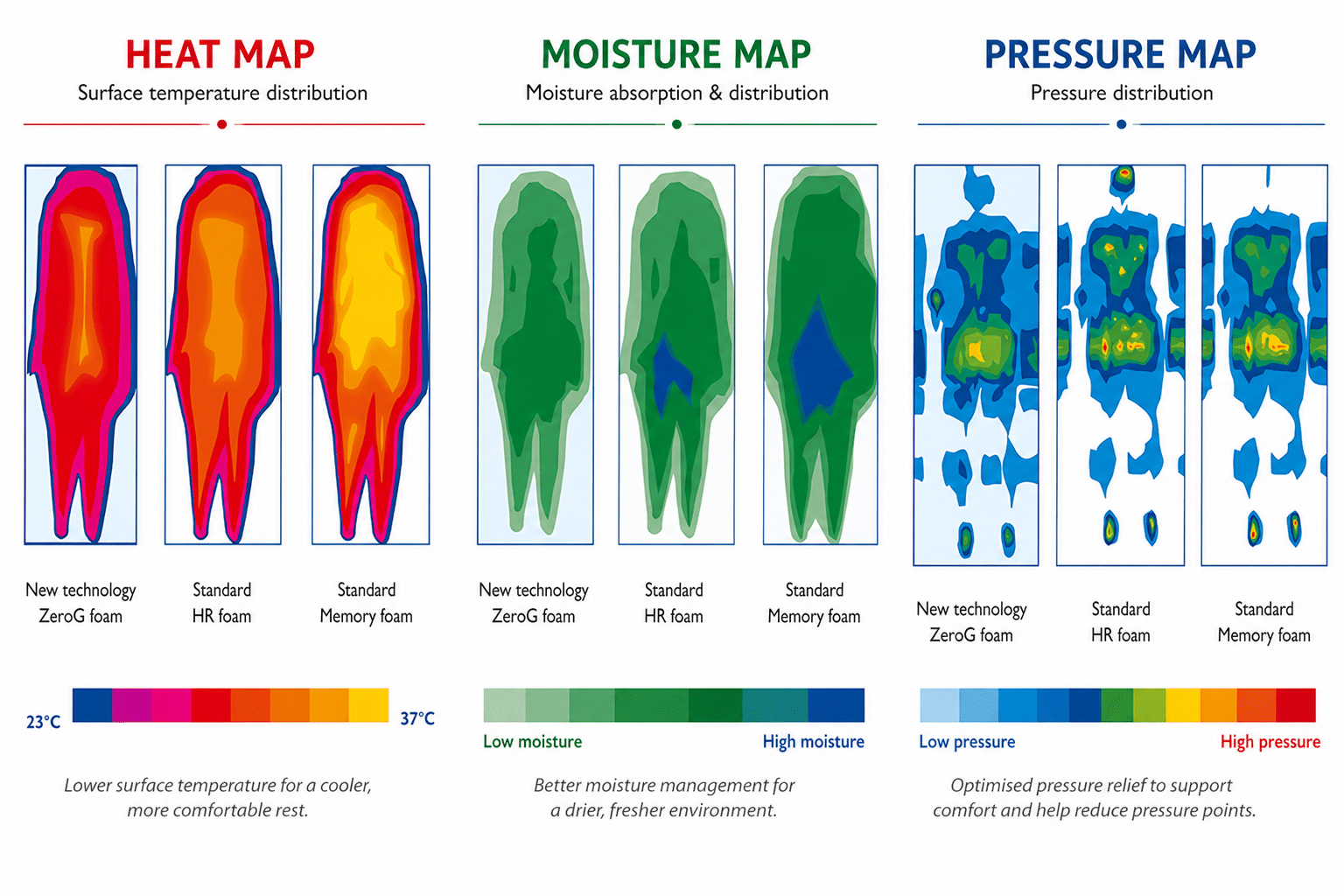
Pressure mapping comparison demonstrating how ZeroG foam technology improves pressure distribution, moisture management and temperature regulation during extended dialysis treatments.
When patients sit in a dialysis chair for hours, the biggest issue is not simply positioning.
It is pressure, heat and moisture building up over time.
Most seating solutions focus on movement, recline functions and adjustability. While these features are important, what often determines patient comfort during a four to six hour dialysis session is what happens at the surface level, where the body meets the chair.
Pressure concentration, trapped heat and moisture can gradually lead to discomfort, restlessness and reduced tolerance during treatment. Over repeated sessions each week, these factors become increasingly important when evaluating dialysis seating.
The Science Behind Pressure Management
Modern pressure-relieving materials are designed to manage the interaction between the patient and the seating surface.
ZeroG foam technology approaches this challenge through structure rather than simply increasing softness.
Key features include:
-
Open-cell, inhomogeneous foam construction that promotes airflow and moisture dissipation.
-
Significantly greater moisture absorption than conventional foam, helping maintain a drier seating surface.
-
Improved temperature distribution across contact areas to reduce heat build-up.
-
Multi-layer foam construction that delivers pressure relief whilst maintaining support in critical sitting zones.
The result is a seating surface designed specifically for patients who spend extended periods receiving treatment.
Why It Matters During Dialysis
The benefits become more noticeable as treatment times increase.
Patients spending four, five or six hours in a chair can experience:
-
Reduced pressure concentration over prolonged periods.
-
Less discomfort associated with heat and moisture build-up.
-
More consistent positioning throughout treatment.
-
Improved comfort across repeated dialysis sessions.
Small material differences may not be noticeable during a short appointment.
Over several hours, however, they can significantly influence the overall patient experience.
Supporting Patient Comfort and Clinical Outcomes
As healthcare providers continue to focus on patient-centred care, there is increasing recognition that seating design extends beyond adjustability and aesthetics.
Pressure management, temperature control and moisture regulation are becoming important considerations when specifying dialysis chairs and treatment seating.
For renal units, these factors can help support patient comfort whilst contributing to a more positive treatment environment for both patients and clinical teams.
At ANDRAC Medical, we continue to work with healthcare providers to identify seating solutions that balance patient comfort, durability and clinical practicality for long-term treatment environments.